Podcasts are back!

Due to a glitch of some kind, my blog page containing the series of podcasts I produced after my book Digital Enlightenment was published was unreachable for a few weeks. It’s back online now, so enjoy!

Veröffentlicht unter Allgemein | Verschlagwortet mit , | Hinterlasse einen Kommentar

Esszett or not to esszett – that is the question!

The letter „ß“ as a ligature of „ſs“ in an Antiqua type and as a ligature of „ſz“ in Textura und Gothic types.

„How do you know when,in German, a word with an ‚ß‘ needs to have an ‚ß‘ or ’ss‘?“

I recently stumbled across this interesting question on Quora, so I sat down, did some research and compiled this answer:

You have opened a big can of worms here. All the other answers are correct, but they don‘t mention the upheavals – both grammatically and culturally – that have been triggered by the sensless debate about „ß“ versus „ss“.

In the early days of printing , letters that occurred together frequently were combined into a single symbol, a practice called „ligature“ (from the Latin ligare „to bind together“). The monks of the Middle Ages  sometimes used ligatures to save time when copying books by hand.

Some survive to this day, for instance a and e („æ“) or O and E („Œ“) in English. In German the so-called „long s“(written „ſ“) is often followed by the letter z, which used to be spelled „ʒ“. Hence the resulting ligature „ſʒ“. Over the course of time they got stuck together and became „ß“.

In most written European languages, ligatures aren’t normally considered part of spelling, but of a document’s optical or aesthetical design. In other words, they’re nice to have, but not really necessary. The German “ß” is the big exception. Weiterlesen

Veröffentlicht unter An American in Germany | Verschlagwortet mit , , , , , | Hinterlasse einen Kommentar

Abhören unmöglich!


Das hier war der allererste Beitrag im Cole-Blog – nur hieß er damals nicht so, weil das Wort noch nicht erfunden war! Das verdanken wir dem Programmierer Peter Merholz, der ihn 1999 erstmals verwendete. 2004 erklärte Merriam-Webster „Blog“ zum Wort des Jahres.


Laut „Spiegel“ sind Handys vor allem bei Ganoven und Kriminelle beliebt. „Mafiosi verständigen sich zunhemend per Funktelefon, denn die Polizei kann im D-Netz bislang nicht mithören“, unkten die Kollegen vom Hamburger Nachrichtenmagazin – und zitierten reihenweise Ordnungshüter, die dafür plädieren, die bislang abhörsichere GSM-Technik möglichst schnell für staatliche Lauschangriffe zu öffnen.

Die Netzbetreiber Mannesmann und Telekom werden gerügt: Angeblich würden sie sich „hinter Datenschutzbestimmungen verschanzen“. Genauer: Sie weigern sich, die entsprechenden teuren Umbauten ihrer Sendeanlagen auf Kosten der Kunden vorzunehmen. Mannesmann-Sprecherin Barbara Kögler wird mit der Forderung zitiert: „Der Staat soll zahlen!“

Ich habe einen noch besseren Vorschlag: Laßt alles, wie es ist! Ich finde es ganz beruhigend zu wissen, daß mir niemand, aber auch niemand zuhören kann, wenn ich im D-Netz telefoniere. Wir werden im Leben schon genug beschüffelt und erfaßt.


Folgen Sie mir auf Facebook und Twitter oder schauen Sie sich meine Videos auf  YouTube an.

Veröffentlicht unter 30 Jahre Cole Blog, Mobilität | Verschlagwortet mit , , , | Hinterlasse einen Kommentar

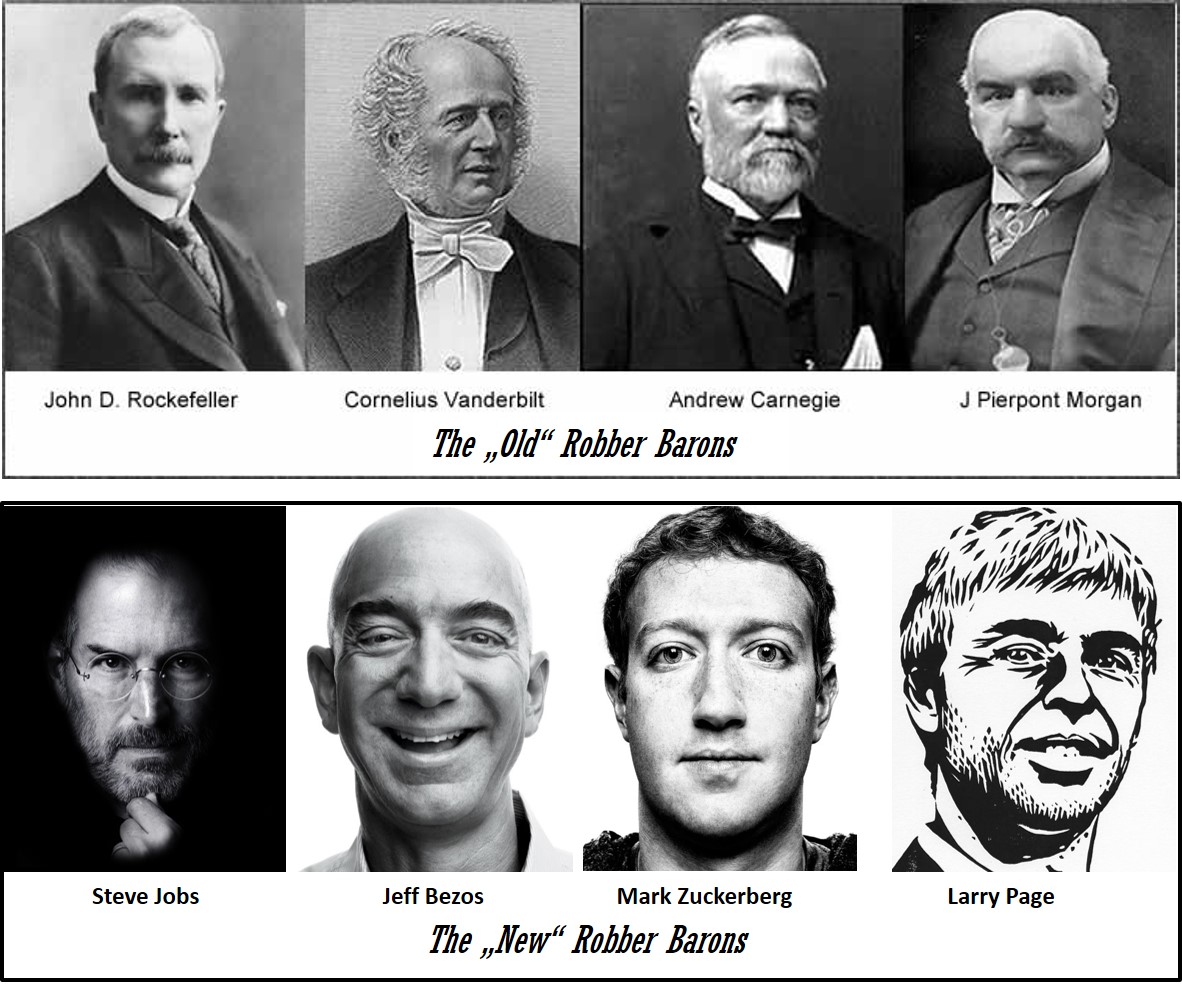
Robber Barons

What is the biggest obstacle in the way of transnational IoT? Borders, of course – or, more precisely, national borders.

This might seem counterintuitive at first. After all, data flows around the world all the time without ever stopping for a customs check. Isn’t that what the original internet was all about – packet switching and avoiding network bottlenecks? I distinctly remember the story told in the early days of the internet of how the US military ordered a communications system that would re-route information around the craters left by Russian atom bombs. Even if Washington was just a smoking ruin, the generals in their bunkers could still press the red button to unleash a counter attack.

A couple of weeks ago my wife and I travelled from our home in the Austrian Alps to Waldshut, a quaint little town in Germany on the banks of the Upper Rhine. The quickest way to get there was through Switzerland, so we crossed the border at Konstanz and drove for about an hour and then crossed back into Germany.

At some point I tried to make a call but my smartphone wouldn’t work. Instead, up popped a text message from my Austrian provider saying I had run up data roaming charges of over €1,600 – and they would only unlock my phone after I’d paid my bill.

It looks to me like the Austrian telephone company I use has taken a correspondence course run by the Italian Cosa Nostra – who are also very good at holding people and property hostage for a huge ransom. But that isn’t the point here.

I had, in fact, just recently signed up for a tariff called Europa Roaming by which I was supposed to be charged my local rate no matter where I used my smartphone in Europe. “Sorry, but Switzerland isn’t part of the European Union,” the guy from customer services informed me. That meant I was still going to be charged a ludicrously high roaming rate that only applies in Switzerland.

And to make matters worse, I was using Google Maps as a navigation aid. Google, it seems, keeps checking with the server every 30 seconds or so to determine the phone’s new position. Every time a new connection is established, a charge for 1GB of data was added – even though only a tiny amount of data actually passed across the net. Turns out this is perfectly legal according to the complex codex of the phone industry. If only I’d read the fine print of my contract beforehand.

Which brings me, in a roundabout way, to IoT in general and autonomous vehicles in particular. Weiterlesen

Veröffentlicht unter Digitale Transformation, IoT | Verschlagwortet mit , , | Hinterlasse einen Kommentar

Feuer-Eier

Rezept für Sambal Olek Telur (Eier in heisser Soße)

Von meinem Freund John Saswito aus Jakarta, der es von seiner Mama hatte.

Sambal Olek ist in Indonesien ein Grundnahrungsmittel. Frisch zubereitet schmeckt er unvergleichlich viel besser als das industriell vorgefertigte Zeugs aus dem Asiamarkt.

Zutaten:

500g   rote Chilies (Sorte ist beliebig wählbar, je nach Schärfewunsch; ich verwende am liebsten Jalapenos mit drei oder vier kleinen Cayenne, Tabasco oder Habanero-Chilies für die Schärfe (mir kann es nicht scharf genug sein!) Zur Not gehen auch rote Peperoni. Wer es lieber mild mag, kann auch eine rote Paprika mit verarbeiten. Weiterlesen

Veröffentlicht unter Essen & Trinken | Verschlagwortet mit , | Hinterlasse einen Kommentar

Which do you prefer: a Kant Car or an Aristoles Audi?

Driverless vehicles will have to deal with tricky life or death decisions which philosophers have argued about for years. So who will the artificial intelligences behind the wheel choose to favor? I asked Janina Loh, who teaches philosophy at the University of Vienna, for her thoughts on the ethics of self-drivbing cars.

Will autonomous vehicles represent a step toward greater safety or are they an added risk?

Since 90% of all traffic accidents are due to human error, chances are that self-driving cars will reduce the current number of pileups. But even the best autonomous vehicles will eventually be involved in serious incidents. Today, the driver makes decisions spontaneously and reacts by reflex because of the lack of time and information required to make informed ethical decisions before it’s too late. Essentially, the same will be true with self-driving cars but their decisions will be largely based on automation, so it will actually be the algorithms used and their programming that decide what actions to take. That’s why we need to make sure that certain ethical principles are built into our technical systems.

So in the worst case, machines will have to decide over life and death, won’t they? Weiterlesen

Veröffentlicht unter Digitale Aufklärung, Digitale Transformation | Verschlagwortet mit , , , , , , , , , , | Hinterlasse einen Kommentar

Tim’s Top 100

Meine absoluten Lieblingsrestaurants*

Es handelt sich hier um eine Liste derjenigen gastlichen Stätten, die ich immer wieder aufsuche, wenn ich in der Nähe bin. Natürlich ist sie nicht vollständig, und ich besuche auf meinen vielen Vortrags- und Urlaubsreisen auch andere Restaurants – die mir allerdings nicht so in Erinnerung geblieben sind wie diese, meine 100 Lieblingslokale aus aller Welt. Aus der Aufstellung wird klar, dass ich gerne italienisch esse, häufig in Fischlokalen verkehre und auch preiswertere Gaststätten aufsuche, alles nach dem Motto: Hauptsache gut! Das Leben ist nämlich zu kurz, um schlecht zu essen!

Zur Erklärung: * bedeutet preiswertes Lokal, ** bedeutet gehobenes Restaurant und *** bedeutet Spitzenlokal (und frag‘ nicht nach dem Preis…).

Deutschland:

Aying:

Brauereigasthof Aying** (Zornedinger Str. 2)

Berlin:

Ristorante Sale e Tabacchi** (Rudi-Dutschke-Straße 25)

Ess-Bahn Berlin* (Flughafen Tegel)

Austernbar im Obergeschoss des KaDeWe** (Tauentzienstraße 21–24)

Köln:

Daitokai** (Kattenbug 2)

Brauerei zur Malzmühle* (Heumarkt 6)

Hamburg:

Old Commercial Room** (Englische Planke 10)

Hannover:

Roma** (Goethestr. 24)

München:

Paros** (Kirchenstrasse 27)

Anema e cuore Trattoria** (Lohengrinstraße 11)

Trattoria Da Fausto** (Helmtrudenstraße 1)

Hofbräukeller am Wiener Platz** (Innere Wiener Strasse 19)

Izakaya Shoya am Platzl** (Pfitzerstrasse 6)

Schmalznudl Café Frischhut* (Prälat-Zistl-Straße 8)

Weiterlesen

Veröffentlicht unter Essen & Trinken | Verschlagwortet mit , | Hinterlasse einen Kommentar

Robber Barons

Time to switch off!

What is the biggest obstacle in the way of transnational IoT? Borders, of course – or, more precisely, national borders.

This might seem counterintuitive at first. After all, data flows around the world all the time without ever stopping for a customs check. Isn’t that what the original internet was all about – packet switching and avoiding network bottlenecks? I distinctly remember the story told in the early days of the internet of how the US military ordered a communications system that would re-route information around the craters left by Russian atom bombs. Even if Washington was just a smoking ruin, the generals in their bunkers could still press the red button to unleash a counter attack.

A couple of weeks ago my wife and I travelled from our home in the Austrian Alps to Waldshut, a quaint little town in Germany on the banks of the Upper Rhine. The quickest way to get there was through Switzerland, so we crossed the border at Konstanz and drove for about an hour and then crossed back into Germany.

At some point I tried to make a call but my smartphone wouldn’t work. Instead, up popped a text message from my Austrian provider saying I had run up data roaming charges of over €1,600 – and they would only unlock my phone after I’d paid my bill. Weiterlesen

Veröffentlicht unter Allgemein | Verschlagwortet mit , , , , , | Hinterlasse einen Kommentar

Who wants to be a billionaire?

Milliarde

Over the course of European history, the naming of numbers has followed a kind of inflationary upwards trajectory.

In ancient Greece, nobody needed a number much above a thousand, the Greek word for which is “myrioi “ (μύριοι).

It took until the late Middle Ages before demand for higher numbers led Italian bankers to invent a new word for a thousand thousands by simply adding a suffix to the existing word for a thousand, „milglio“. They chose „one“, meaning „fat“ (as in „Peopone“, a fat guy named Pepe).

In the 15th century, the term „million“ was imported from Italy to France, where a thousand thousands were also called a „milione“. However, this term was often used more causally and imprecisely to describe a very large sum of money, so a French millionnaire was simply a very rich person.

Later, when the need for even greater numbers arose, the French mathematician Nicolas Chuquet (1414 or 1455 – 1488 or 1500, nobody seems to know for sure) dreamed up a system that bears his name and which is still in use in America today. In his book Triparty en la science de nombres (1484) he wrote: „Instead of saying a thousand thousand, we will say a million, instead of saying a thousand million, we will say byllion, etc …, and tryllion, quadrilion … octylion, nonyllion, and so others if we wanted to proceed.“ The “bi” in billion is Latin for two, the “try” means three, the “quad” four, and so on. So a billion in English is actually “the second power of a million”, a trillion the third power, and so on. Weiterlesen

Veröffentlicht unter Allgemein | Hinterlasse einen Kommentar

Wann kommt die digitale Wende am Bau?

Die Baubranche ist älter als die Pyramiden, und vieles, was dort heute abgeht, erinnert noch an damals. “Die Bauwirtschaft hält die zweifelhafte Auszeichnung, die geringsten Produktivitätszuwächse aller Branchen gehabt zu haben“, schreiben die Analysten von McKinsey. Und es stimmt: In letzten Jahren war der Produktivitätsgewinn pro Arbeitsstunde im Baugewerbe sogar rückläufig!

Woran liegt das? Die Preise für Baumaterialien sind jedenfalls nicht schuld – die sind dank fehlender Inflation in Europa und den USA fast gleich geblieben! Zwar schimpft die Bauwirtschaft gerne über Bürokratismus und Regulierungswut, aber auch das erklärt die eklatante Stagnation der Branche nicht wirklich..

McKinsey hat dagegen zwei Faktoren ausgemacht, die ihrer Meinung nach die Ursache dafür sind, dass sich am Bau nichts bewegt:

Erstens ist das Baugewerbe im Laufe der letzten Jahre immer weniger kapitalintensiv geworden. Besonders in Europa haben sich Baufirmen bei der Anschaffung neuer Maschinen spürbar zurückgehalten – die meisten aus Angst vor der nächsten Rezession. „Die Bauwirtschaft hat durch bittere Erfahrung gelernt, immer für die nächste Rezession vorbereitet zu sein“, sagt Luc Luyten von der Beratungsfirma Bain & Company: „Kapitalintensive Ansätze in der Baubranche führen unweigerlich zu hohen Fixkosten, und es ist schwer, sie bei einem Abschwung wieder loszuwerden. Arbeiter sind im Gegensatz leicht zu feuern.“

Das Resultat: Investitionen in neue Technologien finden kaum statt. Mensch statt Maschine: Am Bau genügt es offenbar immer noch, zwei starke Arme zu haben. Trotz tendenziell sinkender Durchschnittslöhne sind Lohnkosten nach wie vor mit der wichtigste Kostenfaktor im Baugewerbe, und das nicht nur in so genannte Drittweltstaaten wie Indien oder Pakistan, wo es viel mehr Billigarbeiter gibt als bei uns. Weiterlesen

Veröffentlicht unter Digitale Transformation, IoT, Smart Industry | Verschlagwortet mit , , , , , , , , , , , , , , , , , , , , , , | Hinterlasse einen Kommentar