
Medienpädagoge des Digitalzeitalters?

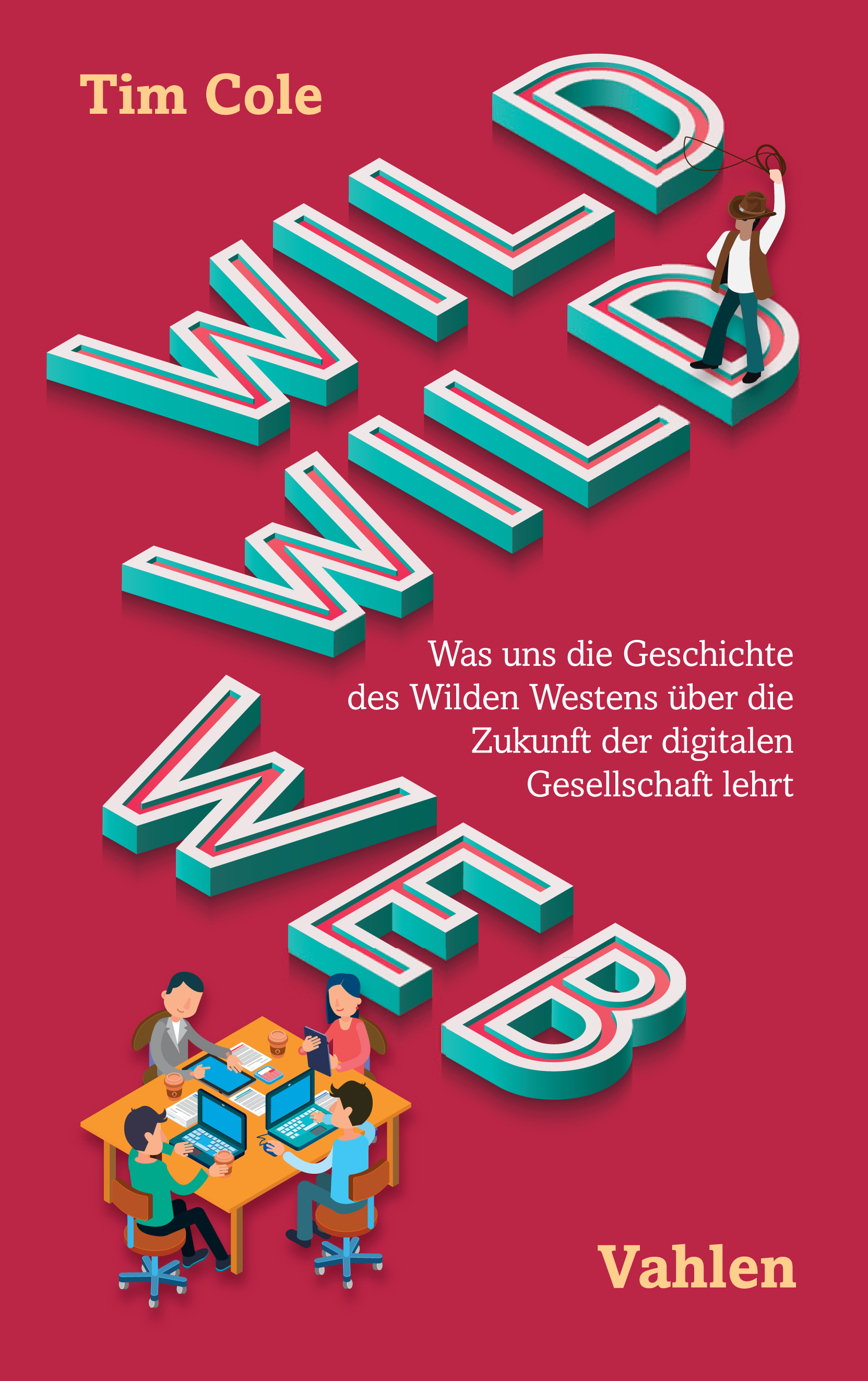
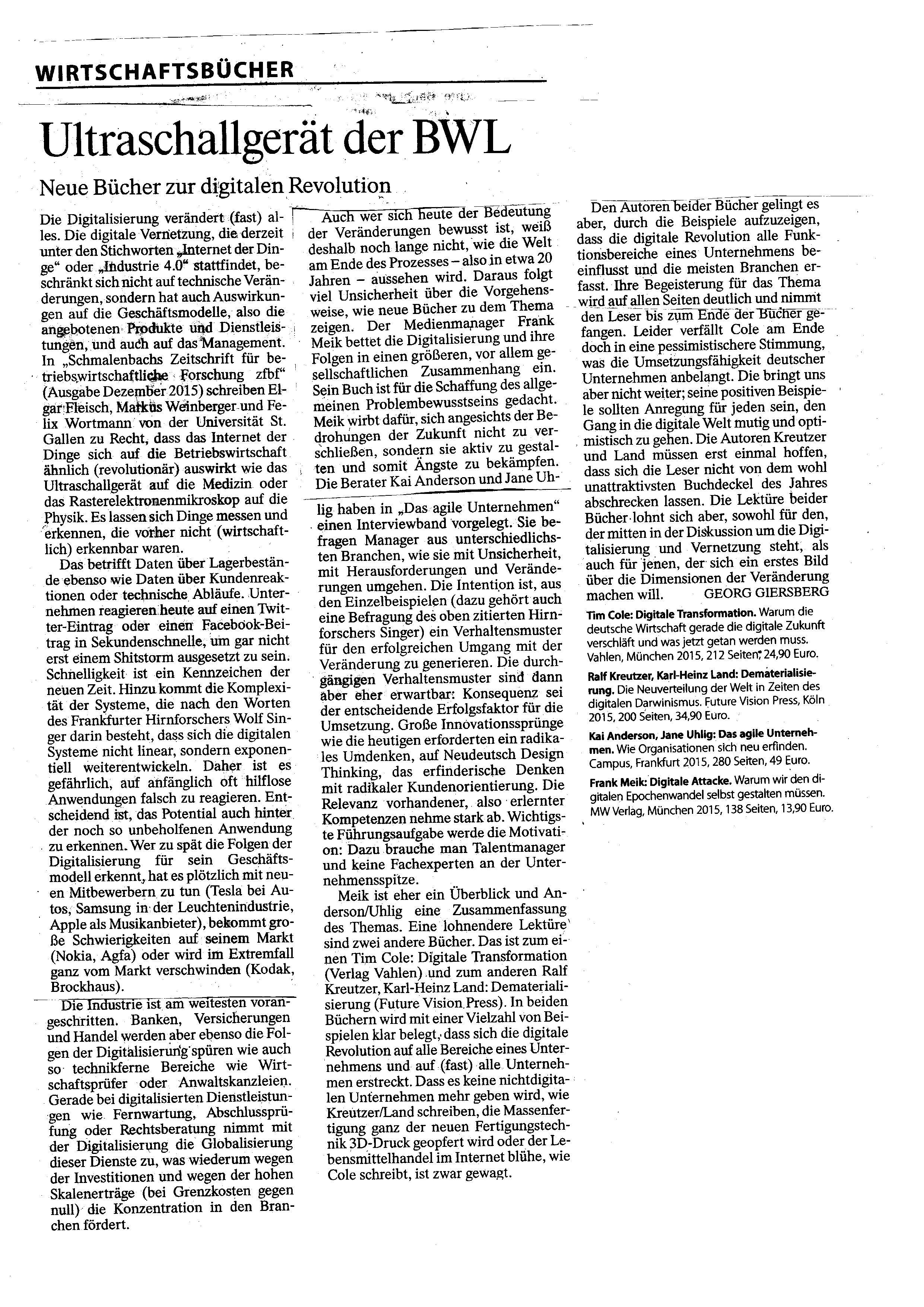
Mein Freund Michael Kausch von vibrio hat eine sehr tiefsinnieg und treffsichere Rezension meines neuen Buchs, Wild Wild Web, geschrieben, inder er mich sehr schmeichelhaft al den „Medienpädagogen des Digitalzeitalters.“ bezeichnet. Danke dafür!

Veröffentlicht unter Wild Wild Web | Verschlagwortet mit , , | Hinterlasse einen Kommentar

I thought I’d seen everything…

In more than 20 years as a public speaker I have seen lots of things – but never anything like this: The Moscow State University of Management has booked me for a 20-minute speech, and to publcize it they plan to put up billboards! Since I do not speak or read Russian I can only hope they got everything right…

Veröffentlicht unter Allgemein | Hinterlasse einen Kommentar

The World of Data – and welcome to it!

I have produced a new podcast about the World of Data and why not all data are created equal. It is an excerpt from my new book, Wild Wild Web: What the history of the Wild West teaches us about the future of the Digital Society. Enjoy!

Veröffentlicht unter Podcasts | Verschlagwortet mit , , , , , , , , , , , , | Hinterlasse einen Kommentar

Computers don’t need to seek power – we will hand it over to them

This is what happens when you turn on the sat-nav and turn off your brain

The biggest danger exponential technology poses is that we will become overburdened. Mankind has a long history of passing on its more arduous tasks to machines, starting with the plow and leading, in our time, to robotic lawnmowers and vacuum cleaners. We tend to delegate important decisions to our mechanical helpmates just because they’re there and we can.

Take the sat-nav, for instance. The minute we turn one of those gadgets on, we simultaneously switch off our brains and blindly follow the directions given to us – no matter where we end up. Too often, this means getting stuck in a wrong-way street or even in some swamp or bog. In a search for sat-nav blunders Google turned up thousands of results, including an item in the Daily Telegraph stating that “Sat-nav blunders have caused up to 300,000 accidents” in Britain alone. Town councils in England and Wales started setting up road signs as early as 2007 warning truck drivers of narrow thoroughfares where they might get stuck if they trust their digital advisors. Traffic engineers say over-reliance on technology has become a major hazard.

The futurist Gerd Leonhard fears that humanity will eventually lose control of technology, not because robots are reaching for power but because we are giving it up. He calls this “self-abdication”. Weiterlesen

Veröffentlicht unter artificial intelligence, Digitale Transformation | Verschlagwortet mit , , , , , , , , , , , | Hinterlasse einen Kommentar

Die Digitale Allmende

Ein alter Hut?

„Technologie ist nicht das Problem, sondern ein Mittel zum Zweck“, schreibt Kevin Keith, der Direktor von GovHack, eine australische Bürgerrechtsorganisation, die jährliche „Hackathons“ organisiert, um das Konzept von Open Data zu propagieren – eine Welt, in der alle Daten für jeden frei verfügbar sind und es als Verbrechen gilt, etwas geheimzuhalten. Da das Prinzip für jeden gilt – Privatpersonen, Firmen und Regierungsstellen –, hat es ja einen gewissen Charme: In einer Welt ohne Geheimnisse kann niemand Daten dazu benützen, andere zu schädigen oder auszubeuten. Das ist eine Lieblingsidee von Libertären, die aber wohl kaum Chancen auf Verwirklichung hat – da werden die Damen und Herren der Geheimdienste noch ein Wörtchen mitzureden haben.

Schade, also müssen wir uns etwas anderes einfallen lassen müssen. Aber wenn Technologie uns die ganzen in diesem Buch beschriebenen Probleme überhaupt erst eingebrockt hat, warum kann sie uns nicht helfen, sie zu lösen? Darum soll es in diesem Kapitel gehen.

Das Internet wurde auf Idealismus aufgebaut. John Perry Barlow, der im Februar 2018 verstorbene Internet-Pionier und Songtexter der Heavy Metal-Rockband Grateful Dead, beschrieb es in seiner Unabhängigserklärung des Cyberraums als ein „commons“, eine Art digitaler Allmende. So nannte man früher Weiden und Äcker, die alle Bauern gemeinsam nutzen durften. Heute beschreibt der Begriff Wissensallmende gemeinsam genutzte, immaterielle Ressourcen wie freie Software (zum Beispiel das Computer-Betriebssystem Linux)  oder freies Wissen (wie die bei Wikipedia zusammengefasste kollektive Intelligenz der Netz-Nutzer). Weiterlesen

Veröffentlicht unter Allgemein | Verschlagwortet mit , , , , , , , , , , , , , , , , , , , , , , , , , | Hinterlasse einen Kommentar

A new moral compass for the Digital Age

©Lanny Lin

“Technology has no ethics – but human society depend upon ethics,” says my friend, the Futurist  Gerd Leonhard. As technology progresses exponentially, our rules and regulations which were arrived at long ago in a linear society no longer fit and need to be updated. “Instead of asking ‘why’?” we keep asking ‘how’?” he says.

Instead of asking how we can draw the most profit out of technological advances, we should be asking why we need them in the first place and what things like AI and self-learning algorithms, self-driving cars and self-automating systems will mean for humanity in the long run. And we need to start soon, before our machines become smarter than us and begin to take over decision-making in areas far beyond our human understanding – and control!

Exponential technologies tend to pass through three stages, Leonhard maintains: first magic, then manic, and finally toxic. Since all of this is happening at digital speed, finding the right balance and deciding where to call a stop gets more difficult every day. He therefore calls for a Global Digital Ethics Council which he would like to see established under the aegis of the UN and consisting of people from all walks of life; normal citizens, academics, governments, business and technology companies, as well as “free-thinkers”, as he calls them: writers, artists, and intellectuals from various fields and schools of thought. Their job would be to serve as an early warning system endowed with the authority to monitor and, when necessary, inform the public about potentially harmful, illegal or immoral developments in technology.

But first, of course, we need to agree what constitutes morality in the Digital Age. Weiterlesen

Veröffentlicht unter Allgemein | Verschlagwortet mit , , , | Hinterlasse einen Kommentar

Wer will denn schon im Wilden Westen leben?

@ stock.adobe.com

Von Michael Kausch (Vibrio)

Er hat es wieder getan. Mein langjähriger Freund und Mitgründer des Czyslansky-Blogs Tim Cole hat ein neues Buch geschrieben. Und dieses Mal ist es ein Western. Na ja, fast. Eigentlich geht es um das, um was es immer bei ihm geht: um uns und unsere Zukunft im und mit dem Internet. Dieses Mal aber zieht er große Parallelen zwischen dem World Wide Web und dem Wilden Westen. Ein W5-Buch sozusagen. Es geht um Macht und um Macher, um digitale Revolver- und andere Helden. Es geht ums Ganze.

Am 5. November 2018 um 11:00 Uhr wird er sein Buch im Münchner PresseClub (Marienplatz 22/IV, Eingang Rindermarkt) und am 7. November, ebenfalls um 11:00 Uhr  in der Kalkscheune in Berlin (Johannisstraße 2, 10117 Berlin) vorstellen.

Falls Sie sich mit ihm duellieren wollen, sollten Sie dabei sein und mit ihm diskutieren. Ich werde mir die Chance nicht entgehen lassen. Aber Vorsicht: er zieht schnell.

Zur Einstimmung hat er mir einen kleinen Text geschickt, den ich nur ein klein wenig überarbeitet hier wiedergebe: eine Art Klappentext für die große Klappe:

Was haben der Wilde Westen von damals und das Internet von heute gemeinsam? Der Deutsch-Amerikaner Tim Cole, Experte für alle Themen rund um das Internet und Blogger der ersten Stunde, führt uns zurück in den amerikanischen Wilden Westen, der geprägt war von Gesetzlosigkeit und dem Recht des Stärkeren. Er zieht eine Parallele zum Aufstieg der Räuberbarone im sogenannten „Blattgold-Zeitalter des 19. Jahrhunderts“ – zu den Rockefellers, Vanderbilts, Carnegies und Morgans und vergleicht sie mit den „modernen Räuberbaronen“ des Digitalzeitalters, also mit Leuten wie Mark Zuckerberg, Jeff Bezos, Larry Page, Bill Gates und „dem größten Räuberbaron von allen“ Steve Jobs. Weiterlesen

Veröffentlicht unter Allgemein | Verschlagwortet mit , , , , , , , , , , , , | Hinterlasse einen Kommentar

Moore’s legacy

First very slowly, then very fast!

More than any other functional principle, Moore’s Law has changed the world out of all recognition. Gordon Moore, one of the founders of Intel, was only 37 when he recognized that the number of transistors you could pack onto a standard computer chip continued to double every 18 to 24 months. Nothing has changed since, and Moore’s Law is firmly enshrined as one of the most gifted perceptions of the Digital Age.

Doubling, as we all know, leads to exponential growth, also known as geometric progression. Gerd Leonhard describes it thus: “First very slowly, then very fast!” The step from 1 to 2 and from 2 to 4 may seem like a snail’s pace, but when you get up to 16, 32, 64, 128, etc. things start happening with lightning speed! Weiterlesen

Veröffentlicht unter Allgemein | Verschlagwortet mit , , , , , , , | Hinterlasse einen Kommentar

Can Europe save the Internet?

How to fix a broken system

The internet needs fixing, but who is to take the lead?. In a dossier for the Washington Post  Tony Romm, Craig Timberg and Michael Birnbaum suggest that “Europe, not the U.S., is now the most powerful regulator of Silicon Valley.” They may be right. Weiterlesen

Veröffentlicht unter Allgemein | Verschlagwortet mit , , , , , , , , , , , , , , , , , , , , , , , , , , , , , | Hinterlasse einen Kommentar

Of FAANGs and ANTs

Bildergebnis für Chewie

Everybody loves Chewie!

Google, Amazon, Facebook and Apple  play in a league of their own, dominating their respective core markets in ways that make it seem impossible for any serious competitor to arise anytime soon. Besides, all four share a certain nefariousness as well as the ability to focus tightly on the one thing that counts for them, namely raking in obscene profits regardless of the cost to society. The term “greed capitalism” could have been coined specially for them, and unless forced to they disregard all norms of civilized commerce, fair business practices and even basic human decency.

Of course there are loads of companies that play in the second division, so to speak: Uber (ride sharing), AirBnB (hospitality, Plantir (Big Data) or WeWork (co-working) spring to mind; all of them belong to the rare species of Decacorns – companies that have managed to achive a market capitalization of ten billion dollars or more. It seems doubtful, however, that any of them will one day manage to rise to play with the really big boys. At the end of the day, they are niche players (big niche players, admittedly)  in their separate fields, but they hardly effect the everyday lives of billions of people in the way the GAFAs do. Hard to imagine life in the digital age without Google; without Uber, life would go on.

So if we want to look for possible succesors to GAFA we need to turn to the East. Chris Skinner, a journalist and financial consultant, wrote in thefinancier.com: “Forget GAFA, the real threat is FATBAG!” Weiterlesen

Veröffentlicht unter Allgemein | Verschlagwortet mit , , , , , , , , , , , , , , , , , , , , , , , , , , , , , , , , , , , , , , , , | Hinterlasse einen Kommentar